Where should I start?
Start with Foundation, then read the seven Foundation books in publication order. Explore the Robot novels afterwards if you want the wider picture.
Go to the reading list ↓The word Foundation can mean a single book, a seven-book series, or the late era of a much larger fictional history. Keeping those three meanings separate makes the reading order much easier to navigate. You do not need to complete a shelf of robot stories before opening the first Foundation book.
At its centre is Hari Seldon’s psychohistory: a way to forecast the behaviour of enormous populations. Against the decline of a galaxy-spanning empire, preserving knowledge becomes a political project. Our suggested starting point lets you discover that project before the prequels explain its beginnings.
Reference: Publisher’s Foundation series guide ↗
One future history, three main eras
Asimov eventually joined stories that had begun separately. In the author’s note to Prelude to Foundation, he describes the Robot, Empire and Foundation books as a future history that was not planned as a perfectly consistent whole. These are connected eras, rather than three parallel universes.
Open each chapter of the map to explore.
01 / ROBOTHumans meet their creations
Begin this branch with the robot stories in I, Robot, or the detective novel The Caves of Steel. The four Robot novels run The Caves of Steel → The Naked Sun → The Robots of Dawn → Robots and Empire. This is the earlier human-and-robot era.
Explore the four Robot novels ↗02 / GALACTIC EMPIREHumanity spreads across the stars
The Empire books occupy the broad middle era: The Stars, Like Dust; The Currents of Space; and Pebble in the Sky. Treat this group as optional context for the civilisation that Foundation inherits. This panel names the books; it is not a required reading sequence.
03 / FOUNDATIONWhat survives an empire?
Foundation is the later historical era. Its original trilogy explores Seldon’s project; two sequels widen the story, and two prequels return to his earlier life. The late-written books make the connections to the older branches more explicit.
Reference: Asimov’s author’s note in Prelude to Foundation ↗
Choose your reading route
Our recommendation for a first visit: the original trilogy, the two sequels, then the two prequels. This preserves the order in which the series reveals its ideas.


How far should you go?
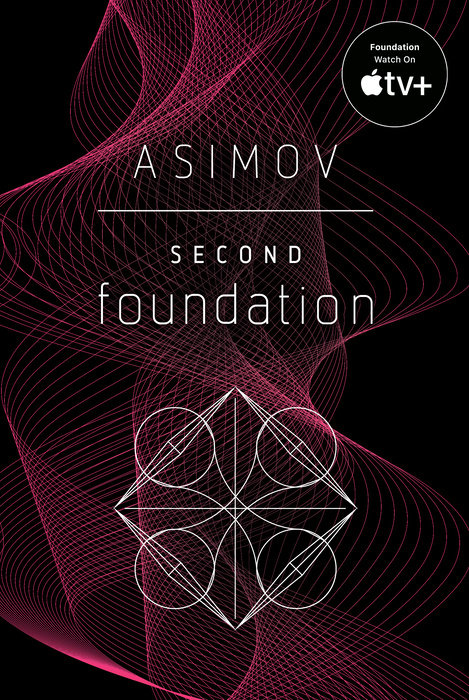
For a manageable first project, choose the original trilogy. After Second Foundation, decide whether you want to stay with these large-scale historical questions or try Asimov’s more intimate detective stories. That is a reading preference, not a prerequisite test.
If the connections themselves are your main interest, you can read the four Robot novels before continuing with Foundation’s Edge and Foundation and Earth. That detour is our editorial suggestion; it changes the rhythm of the publication-order route. Save detailed character crossovers for after you have read them.
For a broad chronological tour, think in eras: Robot, then Empire, then the Foundation story-order route above. There are overlapping robot collections and books by later writers, so a claim that every edition belongs to one definitive numbered list is misleading. This guide’s checklist deliberately covers Asimov’s seven Foundation volumes.
Browse the Foundation series ↗A few reader questions
Do I have to start with I, Robot?
No. It is a useful introduction to Asimov’s robot ideas, but Foundation works as an entry point in its own right. Choose the Robot branch when that subject interests you.
Why not begin with the prequels?
You can, especially on a reread. Our first-read recommendation saves them because earlier-in-the-timeline is not the same as earlier-in-the-reveal. The route selector lets you compare without exposing the connections themselves.
Does this include the television adaptation?
This is a guide to the books. Use the novels’ titles and sequence when building your reading list; a television season is not a substitute for a numbered volume.